Case study · Packaging & dielines
Finished packs. Flat dielines.
Five products, five structures: an energy-shot counter display that went to print for a real client, a perfume sleeve with a sliding tray and a vial insert, a tuck-end tea carton, gable-top milk cartons and a subscription mailer printed inside and out. Each one is shown on the shelf and laid flat, with every cut, fold, bleed and finish marked.
A counter display that sells by flavour
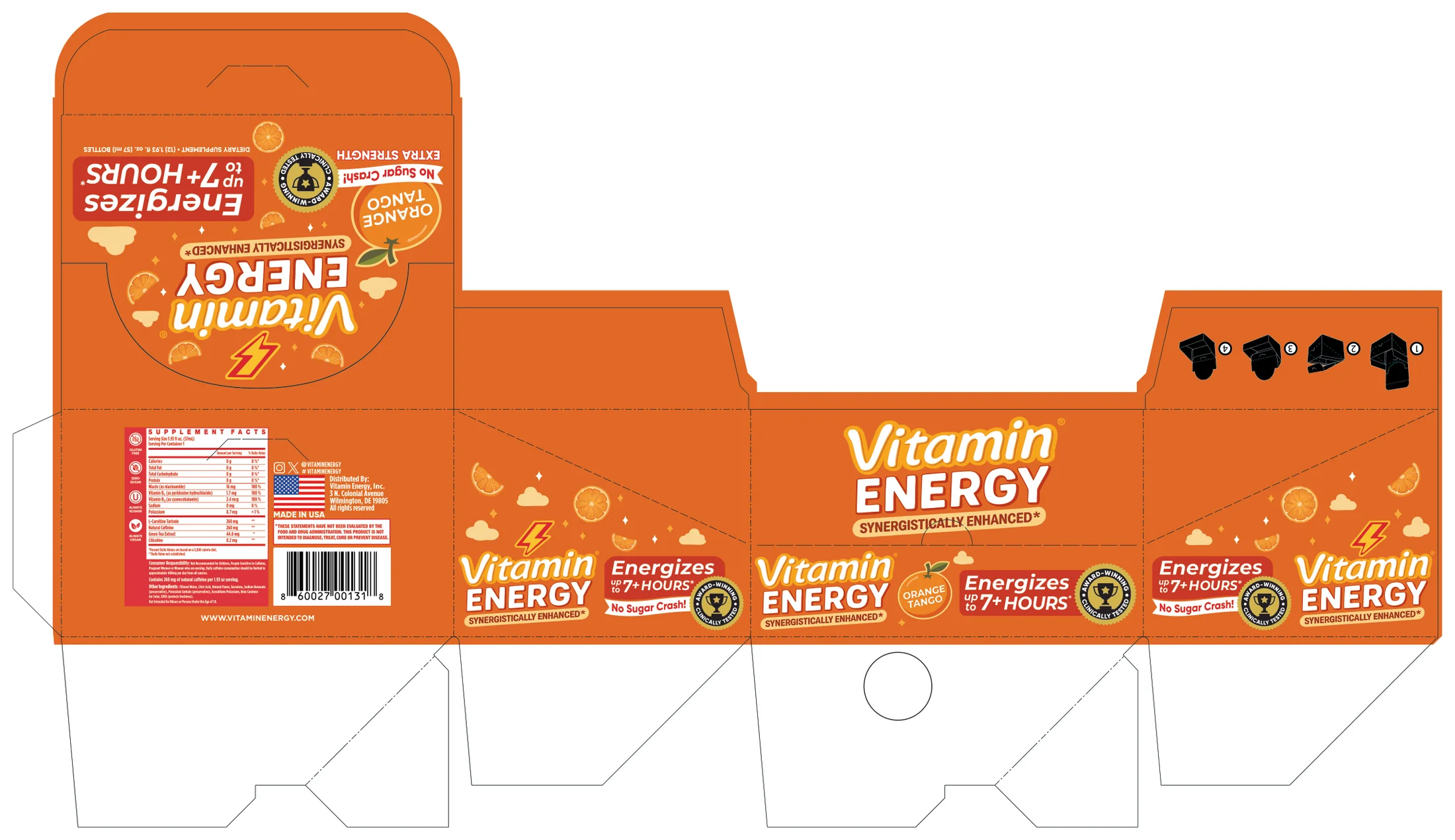
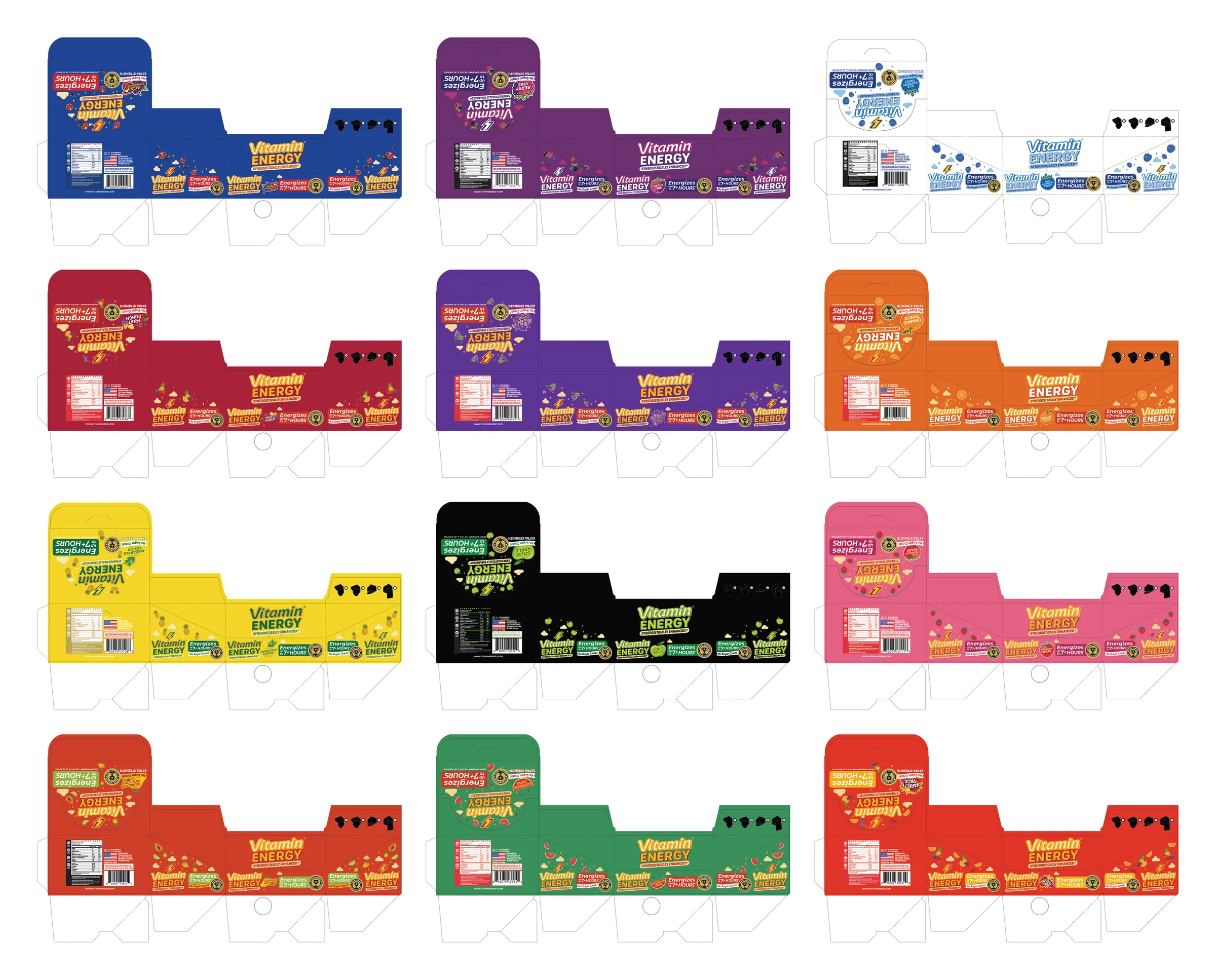
A printed display carton for twelve 57 ml shots that sits next to the till. One die line carries all twelve flavours: the structure never changes, only the colour and fruit. Real client, printed and on counters.
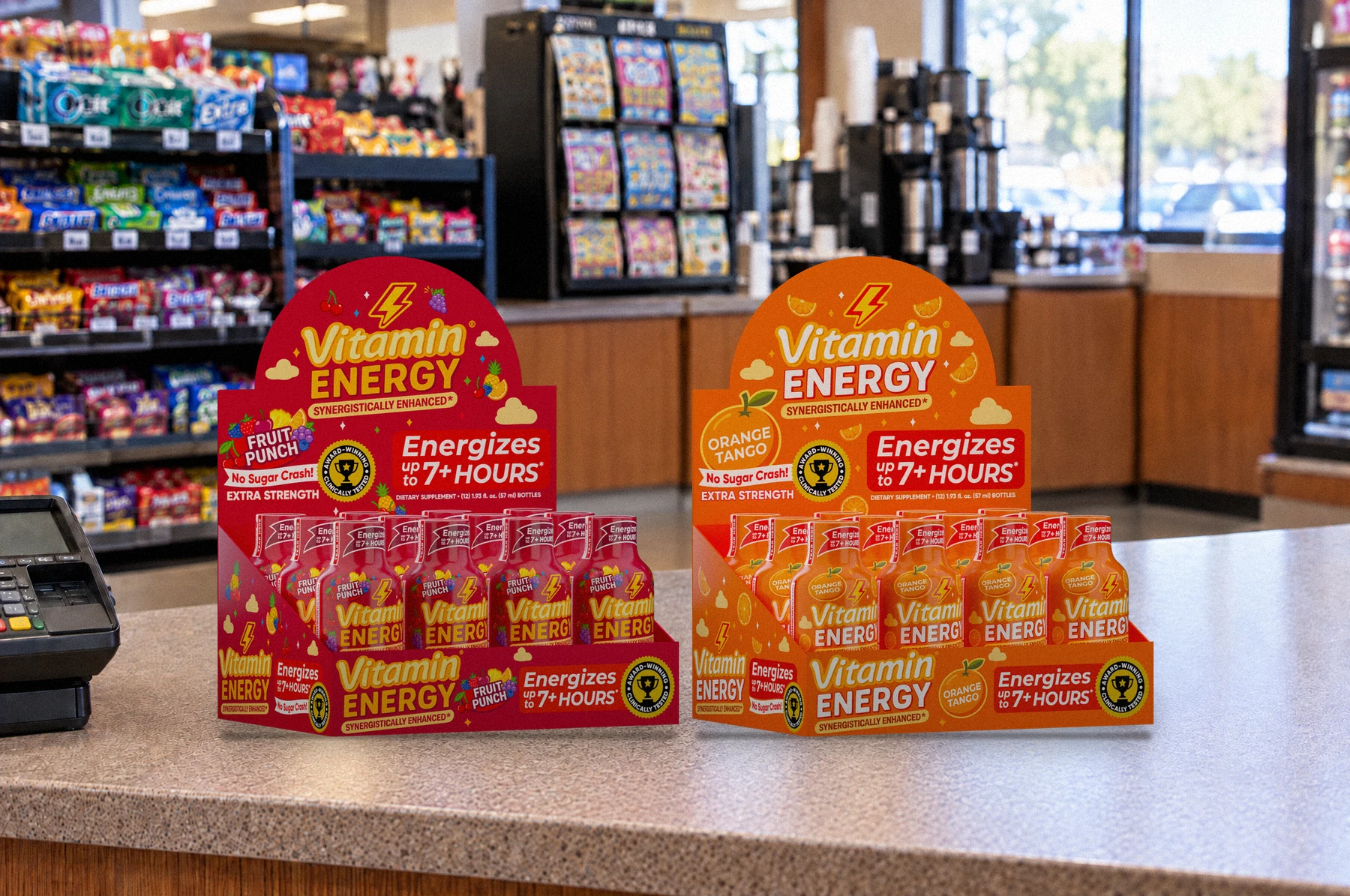
- Header cardThe arched back panel rises above the bottles, so the brand reads from across the shop.
- Angled sides, low frontEvery bottle face stays visible as the display empties.
- Assembly in the printFour pictograms on the inside flap show staff how to fold it in seconds.
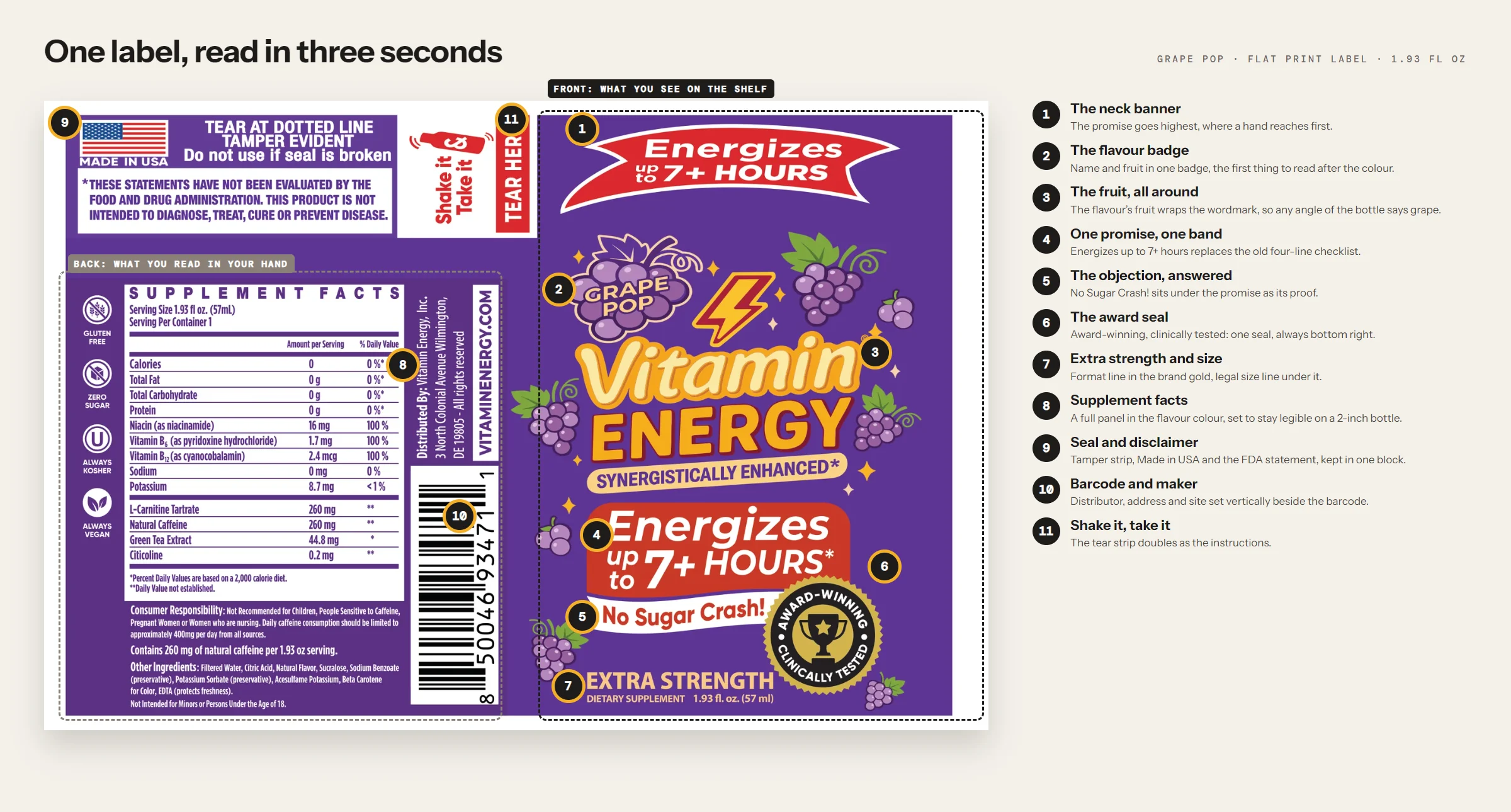
- Facts on the backSupplement facts, UPC and distributor kept off the selling faces.
| Structure | Counter display carton with header card, holds 12 × 57 ml shots |
|---|---|
| Range | 12 SKUs from one die, plus a 24 and 48 variety pack |
| Also on the bottle | Wrap label with tamper-evident tear strip |
| Delivered | Print PDFs per flavour on the converter’s die, 3D renders, Amazon images |
A matchbox for five stolen fires
Five 2 ml vials sold like matches. A black sleeve with real striker strips on both sides slides over a kraft tray, and a die-cut insert cradles each vial. Three dielines, built to fit each other with 1.5 mm of play.
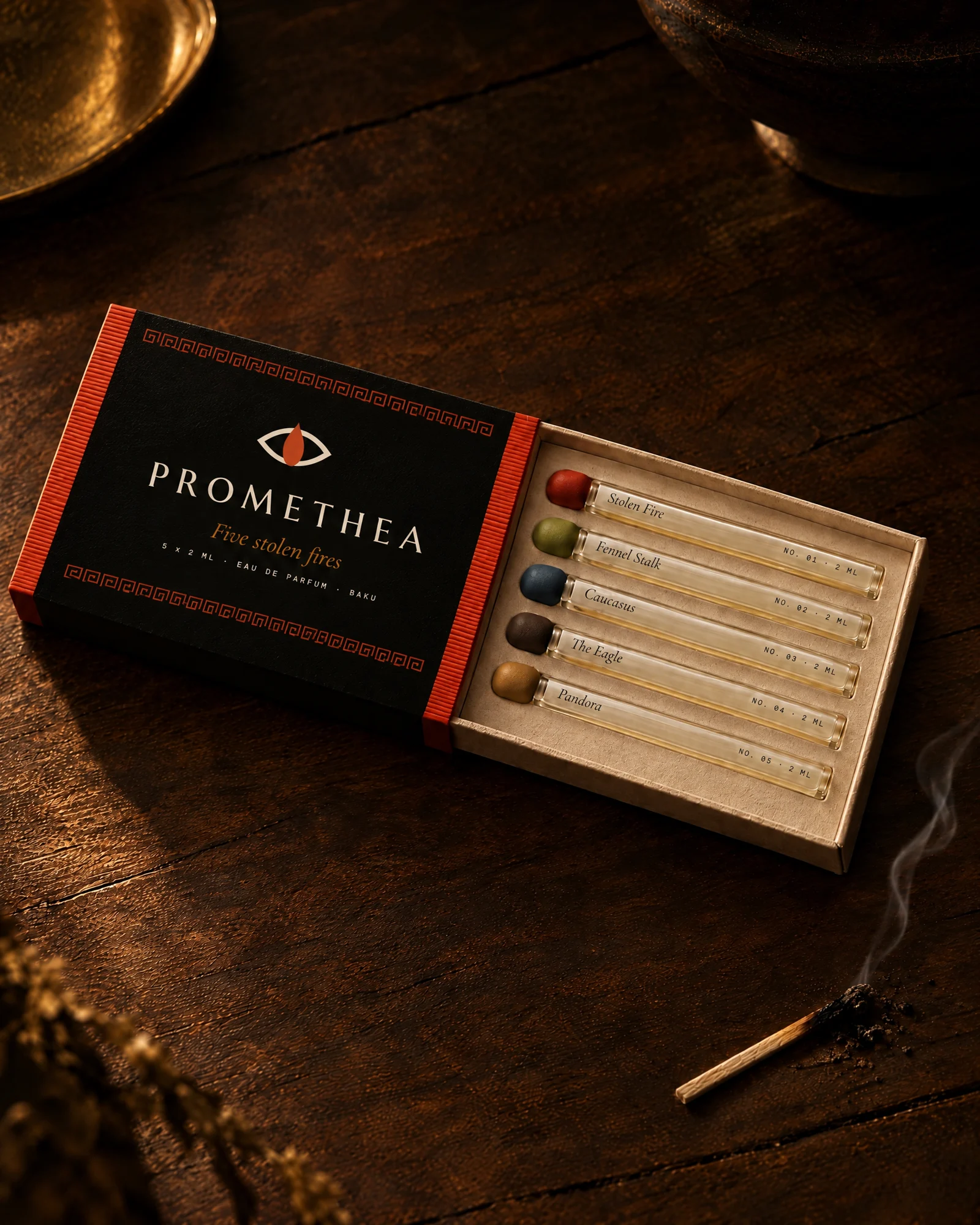
| Sleeve | 350 gsm black-through board, 1 colour (clay), bone hot foil + blind deboss, striker paste on both sides, glued seam |
|---|---|
| Tray | 400 gsm natural kraft, 1 colour, double walls, glued corners, thumb notch on the pull end |
| Insert | Bone board, five 6.2 mm cradle slots, two fold-down legs |
| Fit | Tray 117 × 71 inside a 120 × 74 sleeve: 1.5 mm play each side |
One carton, three flavours, one die
A reverse tuck end carton for 50 tea bags. The colour block carries the flavour across the shelf; the back teaches the brew; one side keeps a clear, unvarnished window for the batch and best-before inkjet. Switch flavours to see what changes on press, and what doesn’t.
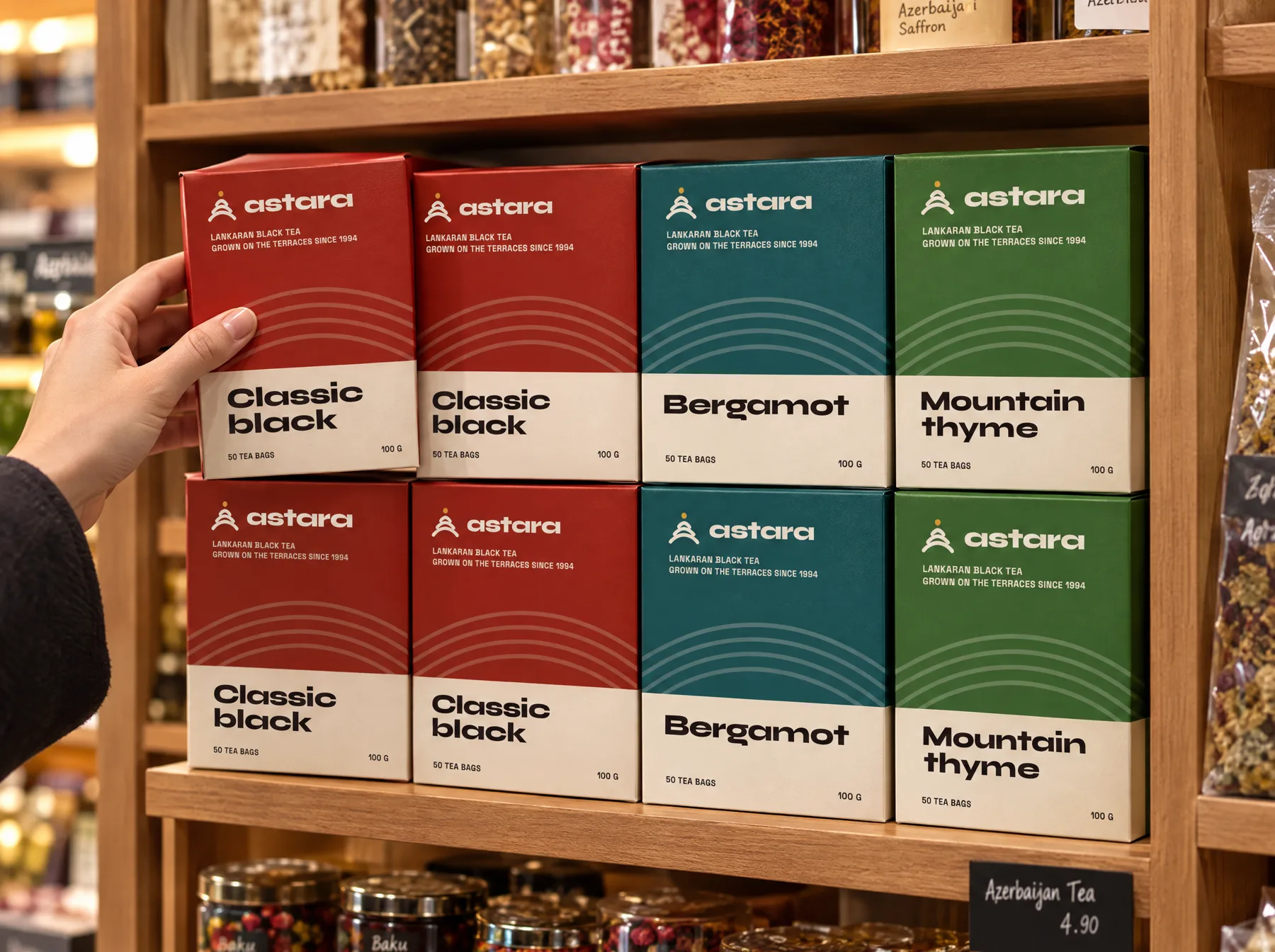
- Shared platesOnly one colour and the flavour text change between SKUs, so the range runs as one gang-printed sheet.
- Reverse tuckTop tuck on the back, bottom tuck on the front: the box opens away from the shopper, with dust flaps keeping bags clean.
- Inkjet windowAn unvarnished patch on the side panel for batch and best-before, printed on the line.
- Glue flap clearNo ink or varnish where the side seam is glued.
A milk carton is a different machine
Gable-top cartons are formed, filled and sealed on the line, so the dieline is mostly about where ink is not allowed: the top fin, the side seam and the bottom are heat-sealed. The mountain band wraps all four sides without a break, and one design system covers two heights.
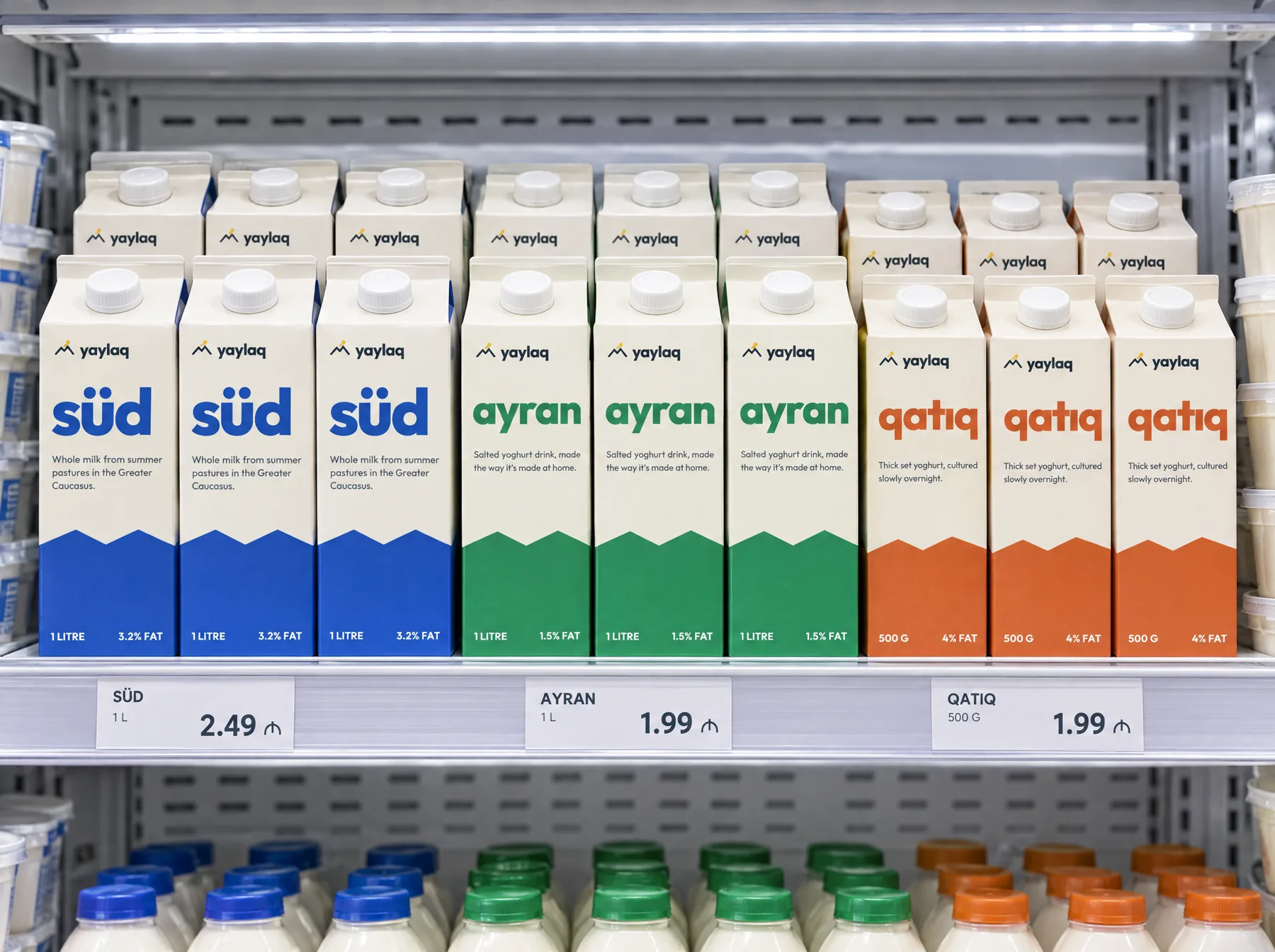
- Seal zones kept cleanNo ink on the top fin, the skived side seam or the bottom seal, where the PE coating has to melt.
- Cap on the roofA 22 mm hole for the screw cap on the front gable, clear of the folds and the logo.
- One band, four sidesThe mountain profile is drawn across the whole blank, so it meets itself at the seam.
- Two heights, one systemThe 500 g qatıq uses a shorter body; the type, band and panels keep their places.
A mailer printed on both sides
A corrugated shipping box that doubles as the unboxing. Outside, navy board and a measuring tape that runs round the walls; inside, one colour and the dog’s own name, printed digitally for every order. Switch sides to see the inside face as the printer sees it.
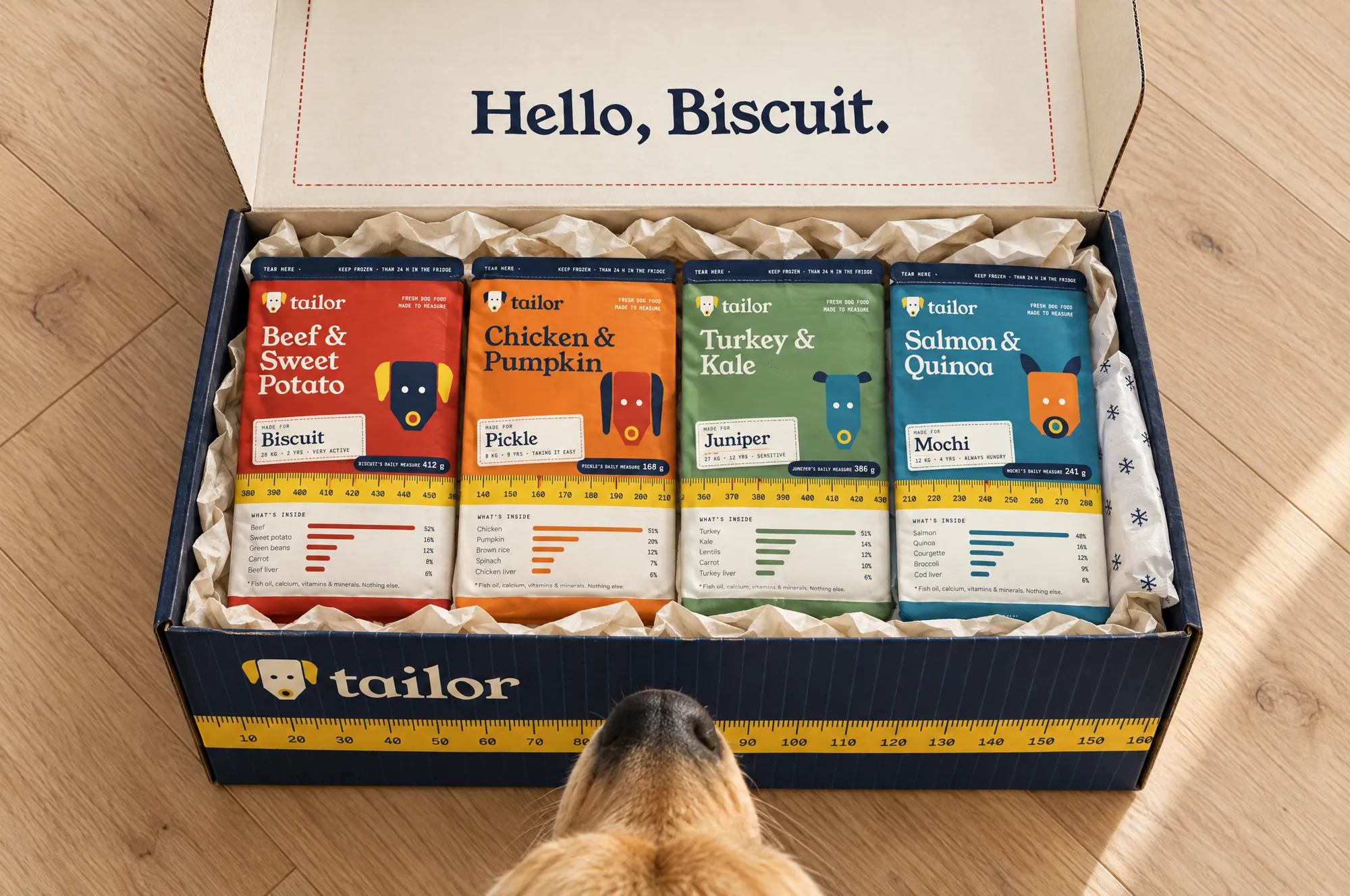
- Art turned to foldThe lid and front wall are printed upside down on the flat, so they read the right way up once the box is closed.
- No tape, no glueRoll-over side walls and front wall lock into slots in the base; the box folds flat for return or recycling.
- Personal inside“Hello, Biscuit.” and the daily portion sit in a variable-data area printed per order.
- Room for the courierA clear patch on the lid keeps the shipping label off the logo.
What the printer gets
Each SKU leaves as its own file, checked against the converter’s die before anything is sent: no surprises at the proof stage.
Your pack, finished and flat.
Send the product size and your printer’s die (or let me draw one). You get the design, the print-ready dielines and the renders, in about four to five days per structure.